

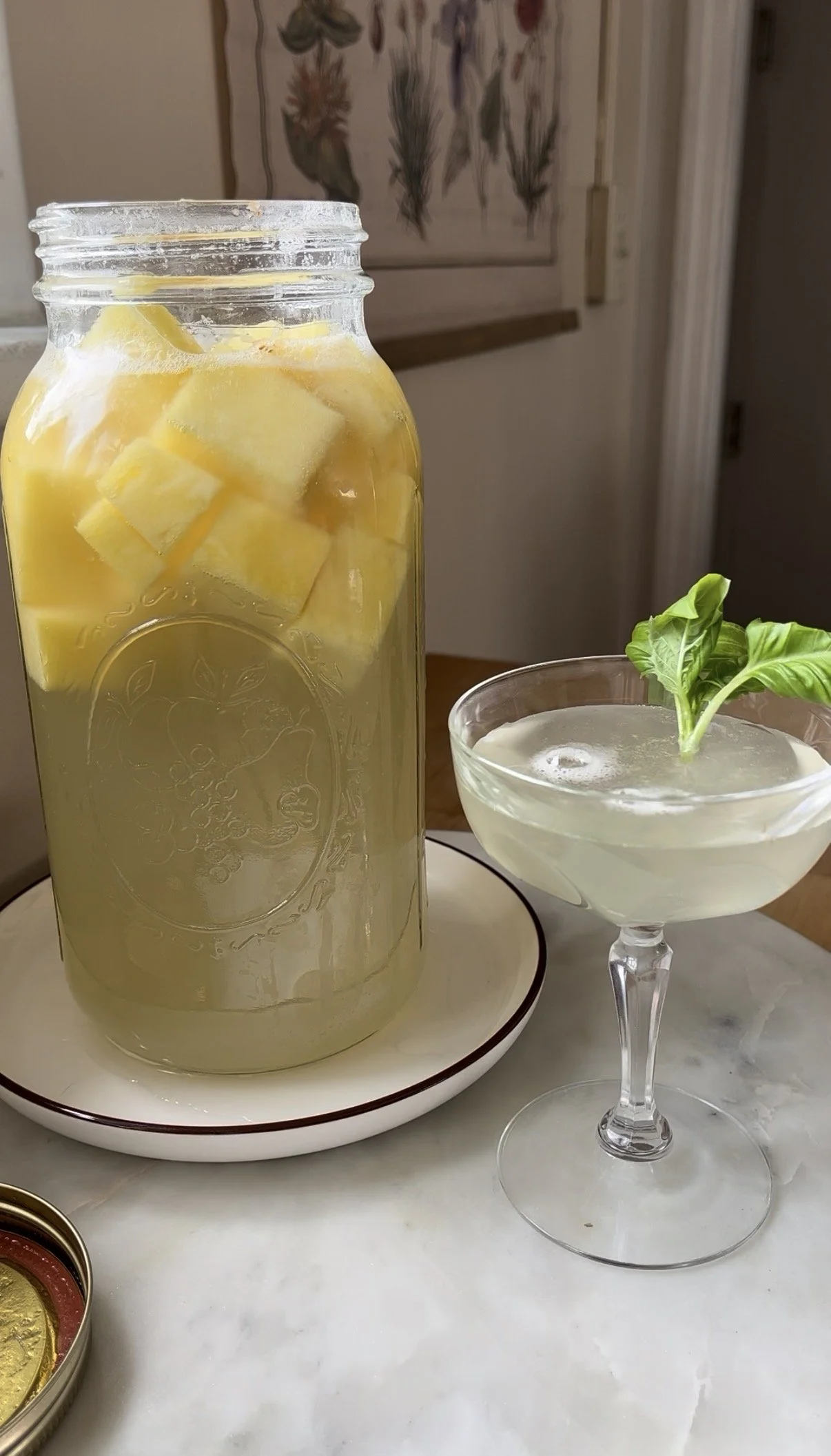
From the kitchen of Jen Merrell @everyday__sage
This season, perhaps we try something different with the food scraps we usually toss in the bin.
Tepache is a traditional Mexican drink, made for generations by letting pineapple scraps ferment gently in sugar water. It’s so simple: a jar, a few days, and the wild yeasts that already live on the fruit’s skin. What comes out is lightly sweet, softly tangy, and bubbly, a naturally carbonated living drink that tastes like a tropical vacation.
Why a fruit ferment is good for the body
When fruit ferments, wild yeasts and friendly lactic acid bacteria go to work on its sugars. The result is a drink that may be a lovely companion to gut health and digestion, much like other fermented foods such as sauerkraut, kefir, and kombucha. A few things worth knowing:
It is a living food. Fermentation creates a community of beneficial microbes along with natural organic acids, which give tepache its bright, tangy flavor.
Pineapple brings its own gifts. It is rich in vitamin C and contains bromelain, an enzyme often associated with digestive comfort.
The sugar is food for the ferment, not for you. In our simple version, the sugar feeds the yeasts and bacteria, and they consume much of it as the days pass. What’s left is a much lighter drink than the sugar quantity might suggest.
Nothing goes to waste. The peel and core hold the most wild yeast, so the parts we would have discarded are the heart of the recipe.
A gentle note: fermented foods are a lovely addition to a balanced way of eating, but they are not a cure-all. Begin with small servings and listen to how your body responds.
The simple version: pineapple, sugar, and water
For now, I’m keeping it plain. Just three ingredients, so we can taste the pineapple and learn how the ferment behaves before adding anything else.
Makes about 2 quarts | Ferment 3 to 5 days
You’ll need
The peel and core of 1 ripe pineapple, scrubbed well (organic if you can)
1/2 cup sugar (white or cane)
6 cups filtered or dechlorinated water, 80-90 degrees F
A clean half-gallon jar (or two quart jars)
A breathable cloth and a rubber band or jar ring
A fine-mesh strainer and bottles with tight lids
Method
Wash. Scrub the pineapple skin well before cutting. The wild yeasts live on the peel, so there is no need to peel deeply or use soap.
Dissolve. Stir the sugar into the water until clear. Using warm water to begin helps this process and will kick-off the fermentation.
Combine. Add the peel and core to the jar. Pour in the sugar water so the scraps are fully covered. Press them down; a small clean plate or glass weight helps.
Cover. Secure the cloth over the jar and set it in a warm spot (68 to 78°F), out of direct sun.
Wait. Begin tasting on day 2, skimming off any foam. It’s ready when it smells sweet and tangy and shows small bubbles, usually day 2 to 3. A cooler kitchen simply takes a little longer.
Strain. Remove the scraps (they’re wonderful in the compost) and pour the tepache into bottles.
Fizz, if you like. Seal and leave out for 12 to 24 hours for a second ferment, burping the lid once or twice. Then refrigerate.
Serve over ice, with a squeeze of lime and a fresh basil leaf if the mood strikes. Keep it chilled and enjoy within about 5 days.
A few things to watch for
A thin white film or yeasty sediment is normal. This is called kahm yeast and can be skimmed off. Fuzzy mold (white, green, black, or pink), or a smell that is foul rather than tangy, means it’s time to let that batch go and begin again. When in doubt, throw it out! Fermentation also produces a trace of alcohol, which is worth remembering if you’re serving it to others.
When you’re ready for the traditional version
Classic tepache is a little more spiced and deeper in flavor. The traditional additions are:
Piloncillo, unrefined cane sugar, in place of the white sugar
A cinnamon stick
Whole cloves
Sometimes star anise, fresh ginger, a slice of chili, or orange peel
I’ll be trying those next, and I’d love to hear which one you’d add first.
